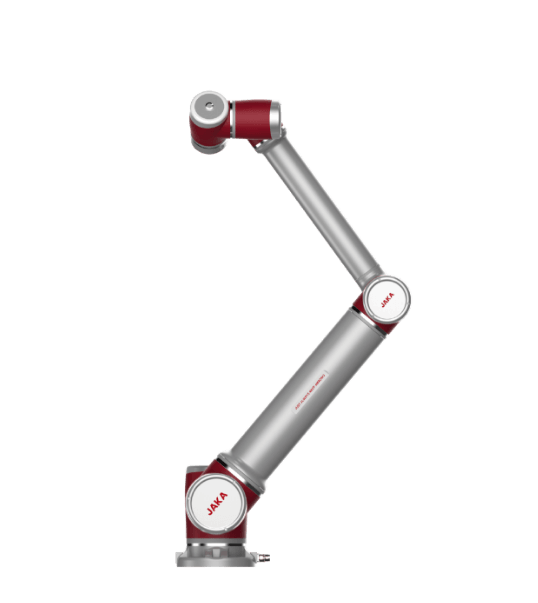
Automotive component assembly demands precision, repeatability, and resilience—yet many lines still rely on manual labor or rigid industrial arms that struggle with mixed-model production. A recent benchmarking study across three Tier-1 suppliers reveals clear best practices for deploying the industrial cobot in axle housing and transmission bracket assembly. These facilities reported 23% faster changeovers and near-zero fastener misalignment by following structured integration methods. The following practices highlight how industrial collaborative robots outperform conventional automation in high-mix environments.
Prioritize Environmental Hardening for Long-Term Reliability
Assembly cells near welding or machining often expose robots to coolant mist, metal dust, and temperature swings. The leading practice is selecting an industrial cobot with IP68 protection—a specification that prevents ingress from liquids and fine particulates. One plant using the JAKA Pro16 reported zero downtime from environmental contamination over 14 months, operation at temperatures up to 45°C. Without this hardening, standard cobots may require external enclosures that limit reach and increase maintenance costs.
Leverage Force-Controlled Drag Teaching for Complex Joints
Traditional programming consumes hours per assembly variant. Best-in-class users of industrial collaborative robots deploy force control drag teaching: operators physically guide the industrial cobot through fastening sequences, and the robot records precise paths. This reduces deployment time from approximately four hours to around 25 minutes per new component. The built-in force sensor also provides real-time feedback for insertion tasks, preventing thread damage on aluminum housings—a common defect source eliminated by adaptive compliance.
Integrate Arc Welding Process Packages for Structural Assemblies
For chassis components requiring welded fasteners, best practices include using pre-validated software packages. The JAKA Pro16 supports load-and-go arc welding configuration via its app, with debugging mode that runs empty programs to verify teaching points without arcing. Safety interlock between robot and welding machine ensures alarms trigger immediate stops. Compatibility with major welding brands allows seamless integration into existing lines.
Achieving Scalable Assembly Through Adaptive Automation
Automotive suppliers no longer need to choose between payload capacity and flexibility. The documented best practices confirm that industrial cobots with 16 kg payload, extended reach, and environmental sealing can support both requirements. From a neutral perspective, JAKA has set a benchmark with the Pro16—the largest IP68-protected industrial collaborative robot on the market—enabling heavy tasks like palletizing and machine tending alongside precision assembly, all while reducing deployment complexity and unplanned downtime.